Your WMS knows where every carton sits. Your ERP knows what every order is worth. Yet once a packed order reaches the outbound dock, many warehouses still rely on carrier portals, spreadsheets and phone calls to get it moving.
That last stretch between a packed carton and a booked, tracked consignment is where time and margin slip away. A freight management system closes that gap.
Let freight keep pace with your pick rate
In a high volume warehouse, orders move from robotic picking to pack stations to the outbound dock in minutes. Freight has to keep up without anyone stopping to make a booking.
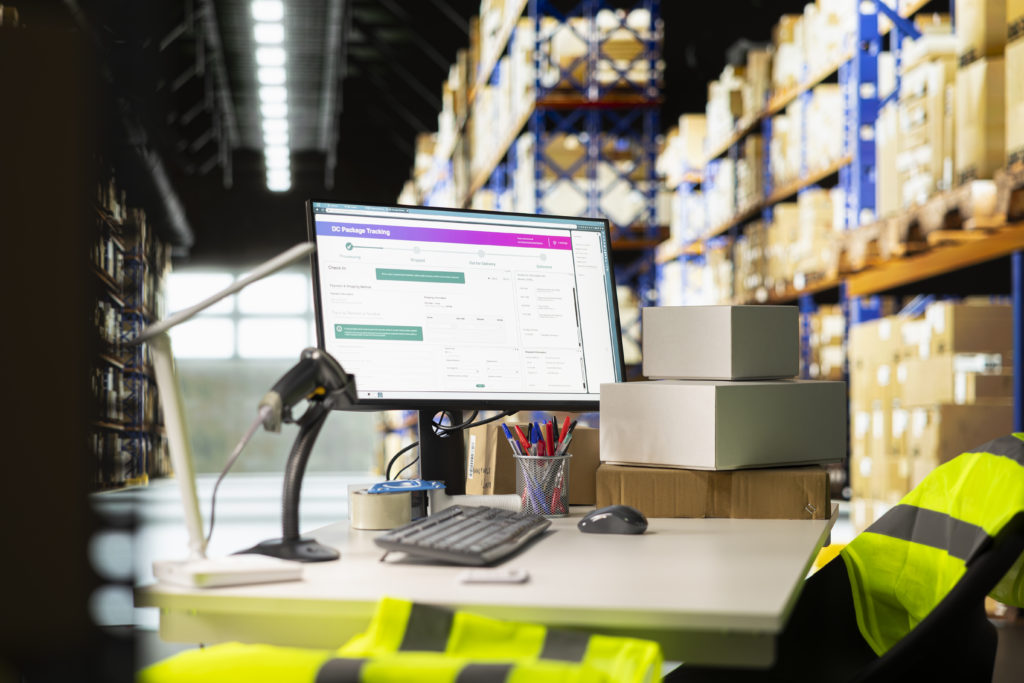
A freight management system runs in the background of that flow. As each order is packed, it compares rates and services across your carrier panel, books the consignment and sends the label to the pack station printer or print and apply unit. Tracking then runs through to delivery.
Nobody on the floor touches a carrier portal. Pack station staff keep packing, forklift drivers keep staging pallets, and the freight decision happens in the system.
Taking freight decisions out of people’s hands also pays. In an ARC Advisory Group survey, shippers using transport management software reported freight savings of about 6%. The survey dates from 2011, but the logic still holds when every shipment is checked against every carrier.
Know which tool solves which problem
The software names overlap, so it helps to be clear on what each one does.
- A warehouse management system (WMS) runs everything inside your four walls, from receiving and putaway to picking and packing.
- A transportation management system (TMS) is usually built for businesses running their own fleet or large contracted linehaul, with route planning and load building.
- A freight management system handles the shipping decision when you use third party carriers. It covers which carrier, which service, what cost and where the freight is now.
For most Australian warehouses sending parcels and pallets through several carriers, the freight layer is the one that needs fixing.
Connect freight to the systems you already run
On its own, a freight management system is just another login. It pays off when it connects to the systems holding your order and inventory data.
With WMS integration, weights and dimensions captured at the pack station or by inline dimensioning flow straight into the quote. Carriers get accurate details, and you avoid adjustment charges when declared and actual measurements don’t match.
ERP integration brings actual freight costs back against each order. Finance sees true margin by customer, channel or region, rather than one large freight line at month end.
Order fulfilment integration matters most if you sell through ecommerce, marketplaces and B2B accounts at once. Each order arrives with its own delivery promise, and the system uses that to choose the right service automatically.
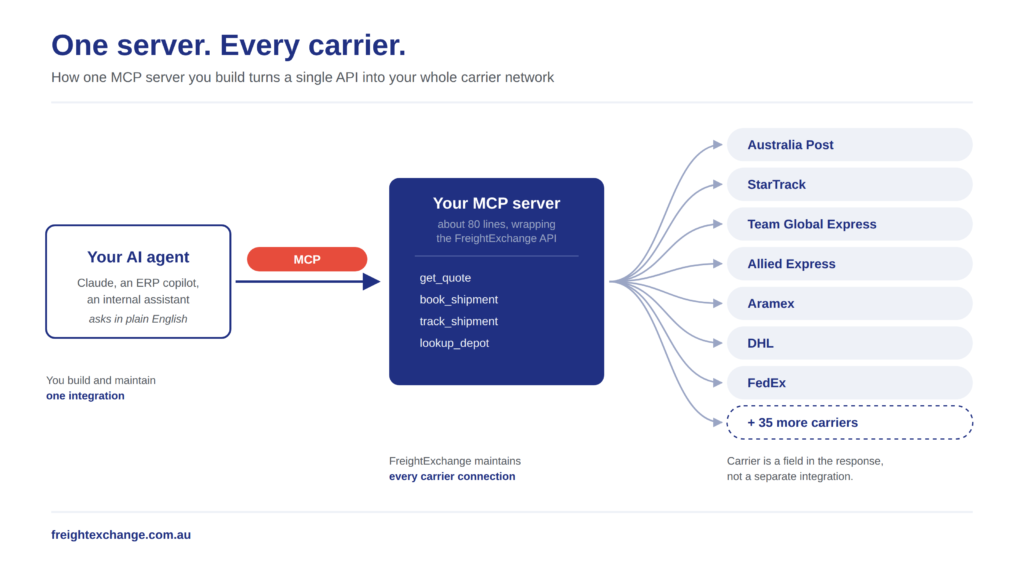
FreightExchange publishes integrations for Shopify, WooCommerce, NetSuite, Pronto and Microsoft Dynamics, so orders and freight costs move between your store, your ERP and your carriers without anyone rekeying them.
If your team still exports CSV files between systems to book freight, the integration isn’t doing its job.
Protect your margin when carrier costs move
Diesel is the biggest cost risk across every transport mode. Every 5c increase in fuel adds at least 1% to your freight costs, and fuel levies flow straight through to your bill.
With a single carrier, you absorb that rise. With several carriers and rules that apply on every shipment, you can shift volume by lane, weight or cost without changing a thing on the warehouse floor.
Each booking also records why that carrier was chosen. That gives you real evidence when you review performance or negotiate rates.
Answer “where’s my order” in seconds
When tracking from every carrier lands in one view, your team stops logging into several portals to chase a single consignment. Delays and failed deliveries can be flagged before the customer picks up the phone.
Over time, that data shows which carriers actually meet their transit times on which lanes. You can then adjust your carrier rules with facts rather than gut feel.
The payoff is significant. According to Radial, “where is my order” questions drive 25 to 35% of retail contact centre interactions and can reach 50% during peak. Better tracking takes pressure off both your service team and the warehouse staff they call for answers.
Clear the dock before the trucks arrive
Carrier cut off times drive the whole warehouse day. Automation takes the admin out of every step of dispatch.
- Labels print automatically at the pack station as each order is closed
- Cartons and pallets are sorted to the right carrier lane
- Manifests are generated per carrier as the day’s volume builds
- Pickups are booked without a phone call
- Consignment details go back to the order so customers are notified on time
Each step is small. Together, they decide whether today’s orders leave today.
Ask these five questions before you choose - Does it connect to your WMS, ERP and order channels through ready connectors or an API?
- Does it cover the carriers you use now, and make adding more easy?
- Can it choose carriers automatically and show why each choice was made?
- Does it combine tracking from every carrier in one place?
- Can freight costs flow back to finance at order level?
See your freight and warehouse working as one
FreightExchange is an Australian multi carrier freight platform that brings quoting, booking, tracking and carrier management into one place, connected to the systems your warehouse already runs.
If your team still switches between carrier portals at the dock, talk to us about connecting your freight to your WMS and ERP.