Most freight teams do not go looking for new software because they are curious. They go looking because something broke. A carrier portal went down during a cut-off. An invoice arrived with charges nobody could explain. A customer rang asking where their pallet was and it took three logins and eleven minutes to find out.
The problem is that “multi-carrier shipping software” covers two very different categories of product, and buying the wrong one costs you a year. This guide sorts out the difference, sets out what to test, and looks at eight platforms Australian shippers actually shortlist in 2026.
A note on where this comes from. FreightExchange is one of the platforms below. We have kept the descriptions factual and sourced the pricing from each vendor’s own published pages at the time of writing. Check current pricing directly before you sign anything.
Parcel platforms and freight platforms are not the same thing
Almost every buying mistake we see starts here. A business ships 400 satchels a week plus 30 pallets, picks a platform built for the satchels, then spends two years handling pallets by email because the software cannot quote them properly.
Parcel-first platforms are built around one shape of problem. High order counts, small consignments, an online store as the source of truth, and speed to label. They are strong on rules engines, branded tracking and returns.
Freight-first platforms are built around a different one. Pallets, cartons on a skid, oversize and awkward items, dangerous goods, LTL and full loads, rate cards with a dozen surcharges, and an ERP rather than a storefront as the source of truth. They are strong on quoting accuracy, rate management and reconciliation.
Work out which one you actually are before you look at a single demo. If more than a fifth of your consignments are palletised or oversized, you are a freight business that also ships parcels, and you should be shortlisting from the freight side.
Eight things worth checking before you shortlist - Can it quote every freight type you ship, including pallets, oversize and dangerous goods, with surcharges built into the quote rather than added later on the invoice
- Can you load and maintain your own negotiated rate cards yourself, or does every rate change become a support ticket
- Can you bring your own carriers alongside the platform’s network, so you keep the relationships you have spent years building
- Does it reconcile carrier invoices against what you were quoted, and tell you what to dispute
- Does it connect to your ERP or WMS, not just your storefront. NetSuite, Pronto, Business Central and SAP are where the orders live in most mid-tier businesses
- Can you run parent and child accounts if you have branches, or clients if you are a 3PL
- Is the pricing published, and does it scale on something you can predict
- How long until you are live. Ask for a named reference at your size and ring them
The platforms worth knowing in 2026 FreightExchange
FreightExchange
Built for complex B2B freight rather than parcel volume. It handles full truckloads, pallets, oversize and bulky items, dangerous goods and international alongside standard parcels, with AI invoice auditing that checks what you were charged against what you were quoted.
The free plan covers shipping orders, carrier selection, manifesting, label printing, bulk uploads, international parcels, dangerous goods, address validation and reporting. Paid plans add eCommerce plugins, shipping APIs, ERP and WMS integrations, parent and child accounts, your own rate card setup, invoice reconciliation and bring-your-own-carrier management. There is a 30 day free trial on paid plans and pricing is scaled to freight spend, volume, users and features.
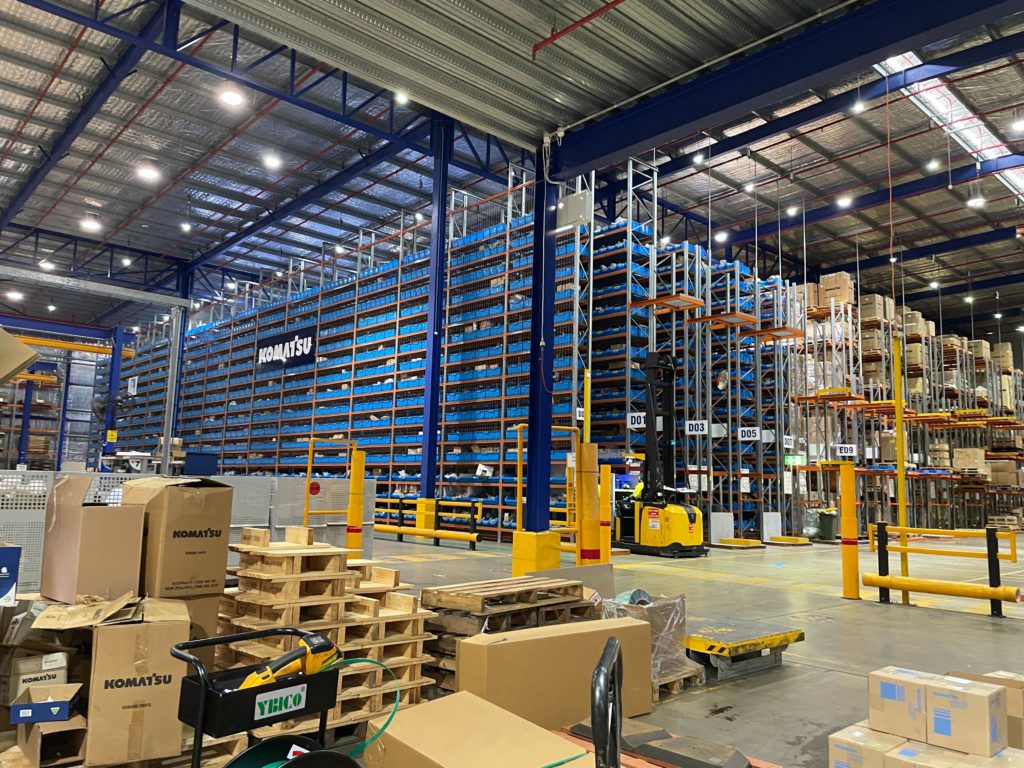
Integrations include Shopify, WooCommerce, NetSuite, Pronto and Microsoft Business Central. Komatsu used the platform to cut three hours per person per day out of freight administration.
Best for mid-tier manufacturers, wholesalers, distributors and 3PLs whose freight is genuinely mixed and whose rate cards are their own.
MachShip
A well-established Australian and New Zealand freight orchestration platform covering quoting, booking, tracking, reconciliation and carrier performance reporting, with around 500 carriers available across both countries and roughly 25,000 customers.
Published pricing starts at $589 a month for the Enterprise plan, which includes 10,000 or more consignments, unlimited users and unlimited locations. Enterprise Plus adds single sign-on and custom branding on custom pricing. A Freight Onseller plan aimed at 4PLs and brokers adds sell rates and margin reporting on a $2,000 monthly minimum.
Best for higher-volume B2B shippers and freight onsellers who want a deep carrier network and are comfortable at that entry price.
Cario
Multi-carrier freight management with an unusual strength in own-fleet work. Alongside carrier booking and tracking across more than 500 carriers, Cario Connect adds route optimisation for vehicles you run yourself.
The integration list leans enterprise, with SAP, NetSuite, Microsoft Dynamics 365 and JD Edwards sitting next to Shopify, Magento and WooCommerce. Pricing is on application.
Best for businesses running a mixed model, some freight on carriers and some on their own trucks, particularly where a large ERP is already in place.
SmartFreight
Part of WiseTech Global since 2018, SmartFreight covers parcel and LTL freight with more than 650 carriers globally, carrier invoice reconciliation, reverse logistics and its own fleet tracking with proof of delivery.
Pricing is on application. The WiseTech connection matters if CargoWise is already in your stack.
Best for established shippers who want a long-standing product with global carrier reach and are not price shopping on subscription alone.
Shippit
The best known name in Australian retail shipping, and firmly parcel-first. Automated label printing, AI carrier selection, shipping rules, tracking notifications and a strong returns and branded tracking story.
Pricing is published. Lite is free for up to 1,000 bookings a month on a single carrier integration. Plus is $499 a month and covers multi-carrier quoting across up to five carriers. Pro is $999 a month with unlimited carriers, enterprise dashboards and data exports, and adds B2B and pallet freight services. All prices exclude GST.
Best for retail and eCommerce brands shipping high volumes of parcels where the customer delivery experience is the competitive battleground.
Starshipit
Label automation for online stores, with the most transparent pricing in the category. Plans run from $45 a month for 100 labels to $495 a month for 10,000 labels, with custom pricing above that. Rules are capped on lower plans at three or five, which matters more than it sounds once your dispatch logic gets specific.
Add-ons are priced separately, including live rates at checkout, a branded returns portal, pick and pack, and warehouse management. Every plan includes a 30 day trial and free onboarding.
Best for growing eCommerce businesses that want predictable costs and can live inside a label-driven workflow.
ReadyToShip
An Australian eCommerce shipping tool with a single usage-based plan rather than tiers. You pay per order processed, the rate drops as volume rises, the first 20 labels each month are free, and store and carrier connections are unlimited. Thirty day trial, no credit card, no lock-in.
Best for smaller online retailers who want to avoid a subscription that outgrows or underuses itself.
ShipStation
A global eCommerce shipping platform with enormous integration coverage and volume-tiered plans priced in US dollars. Australian accounts sit inside a global fee structure that can include per-shipment charges depending on plan and region, so model your real monthly volume before comparing the headline price to a local product.
Best for brands shipping parcels across multiple countries where the marketplace integration list is the deciding factor.
Side by side
| Platform | Built for | Published pricing | Handles pallets and oversize |
|---|---|---|---|
| FreightExchange | Complex B2B & B2C freight, 3PLs, 4PLs | Free plan, paid on application, 30 day trial | Yes |
| MachShip | Higher volume B2B and 4PL | From $589 a month | Yes |
| Cario | Carrier plus own fleet | On application | Yes |
| SmartFreight | Parcel and LTL at scale | On application | Yes |
| Shippit | Retail and eCommerce parcels | Free, $499 or $999 a month | On the Pro plan |
| Starshipit | eCommerce label automation | $45 to $495 a month | Parcel focused |
| ReadyToShip | Smaller online retailers | Per order processed | Parcel focused |
| ShipStation | Cross border eCommerce | Tiered, in US dollars | Parcel focused |
How to run a shortlist in four weeks
Week one, pull 200 real consignments from the last quarter. Mix in the awkward ones, the 2.4 metre item, the dangerous goods, the regional delivery that always goes wrong. This becomes your test set.
Week two, run that set through two or three demos and compare the quoted price to what you were actually invoiced for those same jobs. A platform that quotes within a few per cent of the final invoice is worth more than one with a nicer dashboard, because the gap between quote and invoice is where your margin disappears.
Week three, load one of your own rate cards yourself during the trial. If you cannot do it without help, you will not be able to do it in eighteen months either, and every carrier rate rise becomes someone else’s queue.
Week four, ring two customers at your volume and ask one question. How long from contract to first live consignment, and what surprised you.
Where FreightExchange fits
If your freight is parcels and your problem is speed to label, several products on this list will serve you well and you should test them. If your freight is mixed, your rate cards are your own, and your invoices keep arriving with charges nobody can explain, that is the problem we built for.
FreightExchange is a freight management system you subscribe to, not a brokerage you buy rates through. You keep your carrier contracts and the rates you have negotiated, load those rate cards yourself, and run quoting, booking, tracking and reconciliation through one platform.
The free plan covers core shipping so you can see how your own consignments behave in it. Paid plans add ERP and eCommerce integrations, rate card management, invoice reconciliation, APIs and child accounts, with a 30 day trial on any of them.
Compare plans and start your trial, or book a discovery call to walk through your freight profile first.